A smoking wood stove is rarely a broken wood stove. More often it is a stove being fed wrong — packed too full, loaded with damp splits, or starved of air at the moment it needs it most. The result is always the same: less heat in the room, more smoke up the chimney, and a firebox full of half-burnt wood. None of it requires new equipment, just a few changes in how you load, season, and run the fire.
Overfilling the Firebox
The quickest way to turn a good stove into a smoke machine is to fill it to the top. Fire needs room — oxygen moving around the wood and, in a modern stove, a clear path to the secondary burn tubes near the baffle. Pack the firebox to the roof and you block that path. The fire drops into a slow smolder, the glass goes black, and smoke that should have burned inside the firebox heads up the flue instead.
Leave two to four inches of clear space below the baffle, or respect the loading line printed in your manual. Split your wood so pieces fit without wedging; three to five inches across suits most stoves, with a few larger rounds saved for long overnight burns. When you reload, rake the coals into a level bed near the air inlet instead of dumping new splits onto a mound. Hot coals under fresh wood light it faster and cleaner than any match.
Wet Wood Steals Heat Before It Gives Any
Every pound of water in a split has to be boiled off before that wood can burn, and that heat comes from your fire. A load of damp wood spends much of its energy making steam and sending it up the chimney. You hear it — the hiss, the spit, the bubbling at the end of a log, the dull orange flame that never quite takes hold. You see it as grey smoke and a chimney that needs sweeping more often than it should.
Aim for firewood at 20 percent moisture or less. A basic moisture meter tells you in seconds: split a piece, press the pins into the fresh inside face at room temperature. No meter? Knock two splits together — dry wood rings, wet wood thuds. Seasoned wood also shows cracked ends and feels noticeably lighter than a green piece of the same size.
Seasoning takes planning. Split to final size before stacking, because splits dry far faster than rounds. Stack off the ground in a single row if you can, sides open to the wind, only the top covered. Most hardwoods need six months to a year; dense species like oak often want longer. Ask when the wood was split, not just whether it is seasoned.
Damper and Air Settings
Air is the throttle on a wood fire, and most smoke problems come from closing it too far, too soon.
On a cold start, give the fire everything: primary air wide open, door cracked an inch for the first few minutes. That initial rush heats the flue and establishes draft. Once the kindling is genuinely caught, close the air in stages — a quarter turn at a time, waiting a few minutes so the fire can respond.
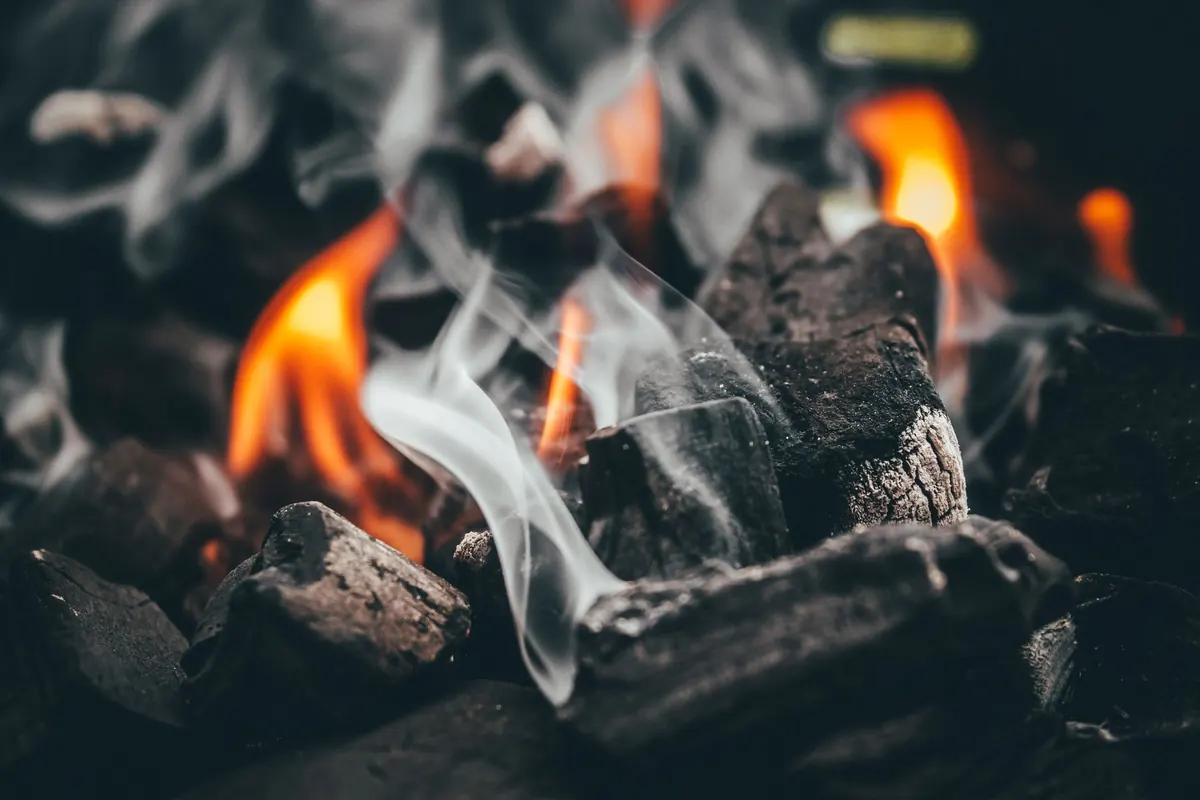
Read the fire, not the lever. Bright yellow flames with some life in them mean the stove has enough air. Lazy orange flames, a dark firebox, and smoke rolling off the chimney mean you have choked it. A fire that roars and pulls heat straight up the flue is over-aired and will burn through a load in an hour.
If your stove has a manual flue damper, treat it as a draft brake on windy days rather than a daily throttle, and follow your model's manual. A stove-top thermometer and a flue-gas thermometer take the guesswork out of it: a hot flue runs clean, and a flue that cools too much is where creosote starts.
Airflow Problems That Have Nothing to Do With the Wood
Sometimes the fire is fine and the house is the problem. Work through the simple things first:
- Chimney height. A short chimney, or one ending near a roof, wall, or tree, cannot build steady draft. The usual rule of thumb is at least three feet above the roof where it passes through, and two feet higher than anything within ten feet.
- Flue size. A flue much larger than the stove outlet lets gases cool and slow before they leave, which weakens draft and drops smoke into the room when you open the door.
- Bends and runs. Every elbow and horizontal stretch costs you draft. Keep the run as straight and vertical as the layout allows.
- Blockages. A plugged cap, a nest in the flue, or heavy creosote will choke the fire no matter how well you load it. Have the chimney inspected and swept at least once a year, more often if you burn daily.
- House pressure. Kitchen hoods, bath fans, and dryers pull air out of a tight house, and the flue becomes the easiest path back in — so smoke comes out of the stove. Crack a window nearby and see if the fire picks up.
To test draft, hold a lit match near the open stove door with no fire burning and the air control open. If smoke drifts into the room instead of up the flue, you have a pressure or blockage problem — not a firewood problem.
Loading and Tending Habits That Add Up
Small, hot fires beat big, smoldering ones every time. A routine that works in almost any stove:
- Rake the coals forward and leave about half an inch of ash on the firebox floor — enough to insulate, not enough to block the air inlet.
- Lay two or three medium splits on the coals, side by side.
- Pile kindling loosely on top, then a fire starter or a few sheets of crumpled paper at the very top.
- Light the top, leave the door cracked until the kindling catches, then latch it and adjust the air in stages.
Top-down loading burns the smoke off before it ever leaves the firebox, which is exactly the point. Don't leave the door open longer than needed, don't drop one huge round onto a weak fire and hope, and don't reload on a bed of cold ash.
A Short Checklist Before You Blame the Stove
Before you adjust anything, walk through this: Is the wood under 20 percent moisture? Is there clear space under the baffle? Is the air open enough to show visible flame? Is the cap clear and the flue the right size? Most days the answer points at one of those, and the fix is a habit rather than a repair.
Burn smaller loads more often, keep the fire lively, and let the flue run hot enough to stay clean. You will use less wood for the same heat, see less smoke from the stack, and stop wondering why the room never quite warms up. If you are unsure about creosote or the condition of your chimney, have a qualified sweep look it over before the season starts.
Photo: ha11ok / Pixabay